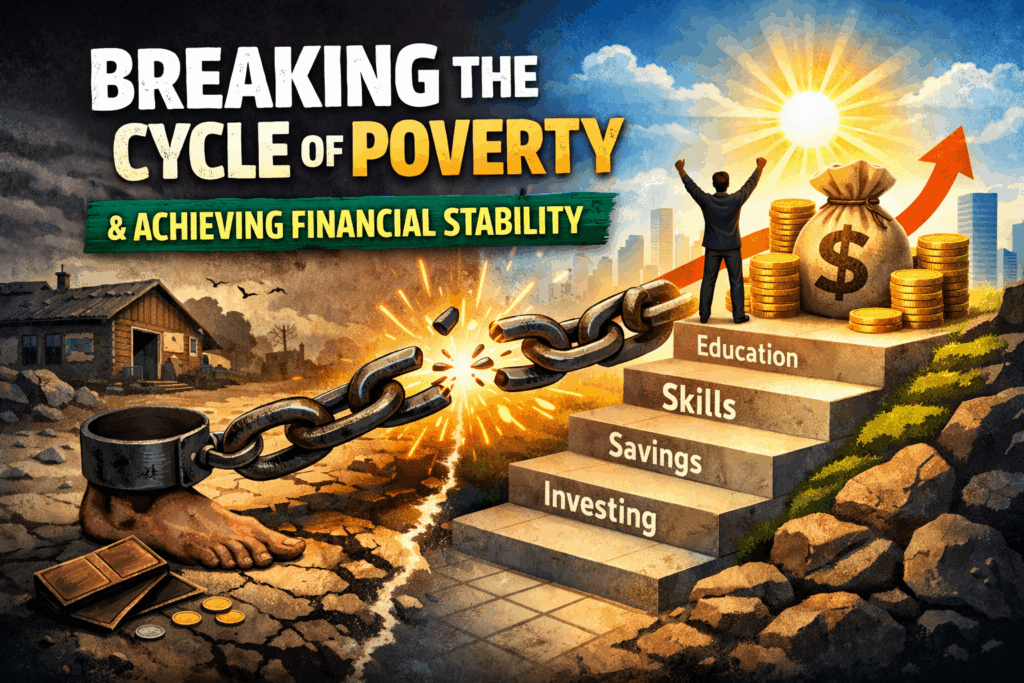
Many people search online every day asking how to break the cycle of poverty and achieve financial stability. This question often comes from frustration, exhaustion, and a desire for a better future. The good news is that financial stability is not reserved for the lucky or wealthy. It is built through small, realistic steps taken consistently over time.
This article provides a practical, step-by-step approach to breaking the poverty cycle, focusing on mindset, habits, and achievable actions rather than unrealistic shortcuts.
👉 Read the Full From Poverty to Financial Stability Ebook Review
Understanding the Cycle of Poverty 🧠
Poverty is not only about low income. It is often a cycle created by repeated challenges that reinforce each other.
Common factors include:
- Limited access to financial education
- Irregular income or job instability
- High stress and decision fatigue
- Debt traps and emergency expenses
- Lack of long-term planning
Breaking the cycle starts with understanding that financial struggles are often systemic and behavioral, not personal failures.
Why Financial Stability Is Different From Getting Rich ⚖️
Financial stability means:
- Bills are paid on time
- Emergency expenses are manageable
- Debt is controlled
- Income and expenses are predictable
Getting rich is a long-term outcome for some, but stability comes first. Without stability, wealth-building becomes nearly impossible.
Step 1: Shift From Survival Mode to Awareness 🔍
When someone lives paycheck to paycheck, most decisions are reactive. The first step is awareness.
Start by:
- Tracking income and expenses for 30 days
- Identifying unnecessary leaks
- Recognizing emotional spending patterns
This step alone creates clarity and control.
Step 2: Build a Simple and Realistic Budget 📝
A budget does not need to be complicated. It needs to be honest.
Focus on:
- Fixed expenses
- Variable expenses
- Savings, even if small
Simple Budget Breakdown Example
| Category | Percentage |
|---|---|
| Essentials | 60% |
| Flexible spending | 25% |
| Savings or debt reduction | 15% |
The goal is progress, not perfection.
Step 3: Create an Emergency Buffer 🚑
Unexpected expenses are one of the biggest reasons people fall back into financial stress.
Start with:
- A small emergency fund
- Even $500 to $1,000 can prevent debt
This buffer creates breathing room and confidence.
Step 4: Reduce High-Interest Debt Strategically 🔄
Debt often keeps people trapped.
Focus on:
- Listing all debts
- Prioritizing high-interest balances
- Making consistent payments
Avoid chasing quick debt relief schemes. Steady reduction works best.
Step 5: Increase Income in Practical Ways 💼
Income growth does not always mean switching careers.
Options include:
- Learning in-demand skills
- Freelancing or side work
- Negotiating pay
- Upskilling through affordable resources
Even small increases can significantly improve stability.
👉 Explore a Realistic Path to Financial Stability
Step 6: Build Financial Habits That Stick 🔁
Consistency matters more than intensity.
Helpful habits include:
- Weekly money check-ins
- Automating savings
- Avoiding lifestyle inflation
- Reviewing goals monthly
These habits compound over time.
The Role of Mindset in Financial Stability 🧠
Mindset influences behavior.
People stuck in poverty cycles often:
- Avoid planning due to fear
- Believe stability is out of reach
- Focus only on short-term relief
Replacing these beliefs with realistic optimism improves decision-making.
Why Shortcuts Often Make Things Worse 🚫
Promises of fast wealth often lead to:
- Risky decisions
- Scams
- Deeper debt
A realistic path focuses on sustainability, not speed.
How Long Does It Take to See Progress? ⏳
Progress timelines vary, but many people notice:
- Reduced stress in a few months
- Better control within 6 months
- Measurable stability within 1 to 2 years
Consistency is the key factor.
Who This Step-by-Step Approach Works Best For 🎯
This approach helps:
- Low-income earners
- Beginners with no financial background
- People rebuilding after setbacks
- Anyone seeking realistic improvement
It is not designed for overnight success seekers.
Final Thoughts 🌱
Breaking the cycle of poverty is not about luck or extreme sacrifices. It is about small, intentional steps repeated consistently. Financial stability is achievable when awareness, habits, and patience work together.
For those seeking a realistic and supportive guide, structured resources can help reinforce these steps.
👉 Read the Complete Ebook Review for a Realistic Financial Path